Valencia Airport (VLC) Flight Compensation: Complete EU261 Guide to Claiming Up to €600
Avioza Team12 min read
No Win, No Fee98% Success RateEU-Wide Coverage
Key Takeaways
Spain is a full EU member state — EU261/2004 applies to every flight departing Valencia Airport regardless of airline, covering Ryanair, Vueling, easyJet, Wizz Air, and all international carriers
Compensation ranges from €250 for short-haul flights under 1,500 km to €600 for long-haul routes over 3,500 km — per passenger, completely independent of your ticket price
Valencia's Mediterranean Levante weather — including sudden sea-breeze storms, gota fría torrential rain events, and coastal fog — causes seasonal disruption spikes but is foreseeable and rarely constitutes an extraordinary circumstance
Las Fallas festival in March and peak summer tourism create extreme demand surges that stress airport capacity; operational failures during these periods are always the airline's responsibility
You have 5 years to file your claim under Spanish civil law (Código Civil Article 1964), with AESA as the national enforcement body
Valencia Airport (IATA: VLC), officially known as Aeropuerto de Valencia-Manises, is the primary gateway to Spain's vibrant third-largest city and the broader Comunitat Valenciana region. Located in the municipality of Manises just eight kilometres west of Valencia's historic city centre, the airport processes approximately 10 million passengers annually through its two interconnected terminal buildings. It is a critical base for Ryanair — which operates the largest share of VLC's traffic — alongside significant operations from Vueling, easyJet, Iberia, Wizz Air, and a growing roster of seasonal charter and low-cost carriers connecting Valencia to destinations across Europe and North Africa.
Valencia Airport's passenger profile is distinctive. Unlike Madrid or Barcelona, which function as major hub airports with extensive long-haul networks, Valencia operates predominantly as a point-to-point leisure and business airport. Its traffic is heavily seasonal, surging dramatically during the summer beach season from June through September, the world-famous Las Fallas festival in March, and the increasingly popular winter city-break market. This seasonality creates intense peaks of demand that push the airport's infrastructure — originally designed for significantly lower passenger volumes — to its operational limits during critical periods.
The airport's location on Spain's Mediterranean Levante coast also subjects it to a specific set of weather challenges that differ markedly from those at inland Spanish airports like Madrid. The Levante coast is prone to sudden sea-breeze-driven storms, the devastating gota fría (DANA) torrential rainfall events that can dump months of rain in hours, and persistent coastal fog during autumn and winter mornings. These weather patterns are thoroughly documented and entirely foreseeable, yet airlines frequently attempt to cite them as extraordinary circumstances to avoid paying compensation.
If your flight at Valencia Airport was delayed by more than three hours on arrival, cancelled without at least 14 days' advance notice, or you were denied boarding against your will, you are very likely entitled to up to €600 per passenger in compensation under EU Regulation 261/2004. This guide provides a comprehensive explanation of your rights at Valencia Airport.
How EU261 Applies at Valencia Airport
Spain has been a member of the European Union since 1986, and EU261/2004 applies with full legal force at every Spanish airport including Valencia-Manises. The coverage at VLC is comprehensive:
Your Flight
EU261 Applies?
Explanation
Valencia → any destination on any airline
Yes
All departures from EU airports are covered regardless of carrier nationality
Any EU airport → Valencia on any airline
Yes
Intra-EU flights are fully covered in both directions
Non-EU airport → Valencia on EU-registered airline
Yes
EU carriers are covered on all their worldwide routes
Non-EU airport → Valencia on non-EU airline
No
Only scenario not covered — non-EU carrier arriving from outside the EU
For passengers departing Valencia, the protection is absolute. Whether you are flying Ryanair to London Stansted, Vueling to Paris Orly, easyJet to Bristol, Wizz Air to Budapest, or any other carrier to any destination, EU261 covers your journey completely. The airline's country of registration is irrelevant for outbound flights — every single departure from VLC is protected.
Disrupted at Valencia Airport?
Specialists in Ryanair, Vueling, and all VLC airline claims
EU261 compensation is fixed by regulation and determined exclusively by route distance. Your ticket price has no bearing whatsoever on the amount you can claim:
Route Category
Distance
Typical Routes from VLC
Compensation
Short-haul
Under 1,500 km
Valencia to Barcelona, Palma, Marseille, Lisbon
€250
Medium-haul
1,500–3,500 km
Valencia to London, Amsterdam, Berlin, Stockholm, Marrakech
€400
Long-haul
Over 3,500 km
Connecting journeys via European hubs booked on single ticket
€600
These amounts are per passenger, including children who occupied their own seat. A family of four disrupted on a medium-haul flight from Valencia to London would recover €1,600 in total compensation — regardless of whether they paid €40 or €400 per ticket.
Important reduction rule: If the airline offered you an alternative flight that arrived within certain time windows of your original schedule, compensation may be reduced by 50%. Specifically: within 2 hours for short-haul, 3 hours for medium-haul, or 4 hours for long-haul flights.
What Causes Flight Disruptions at Valencia Airport
Ryanair's Dominant Position and Turnaround Pressure
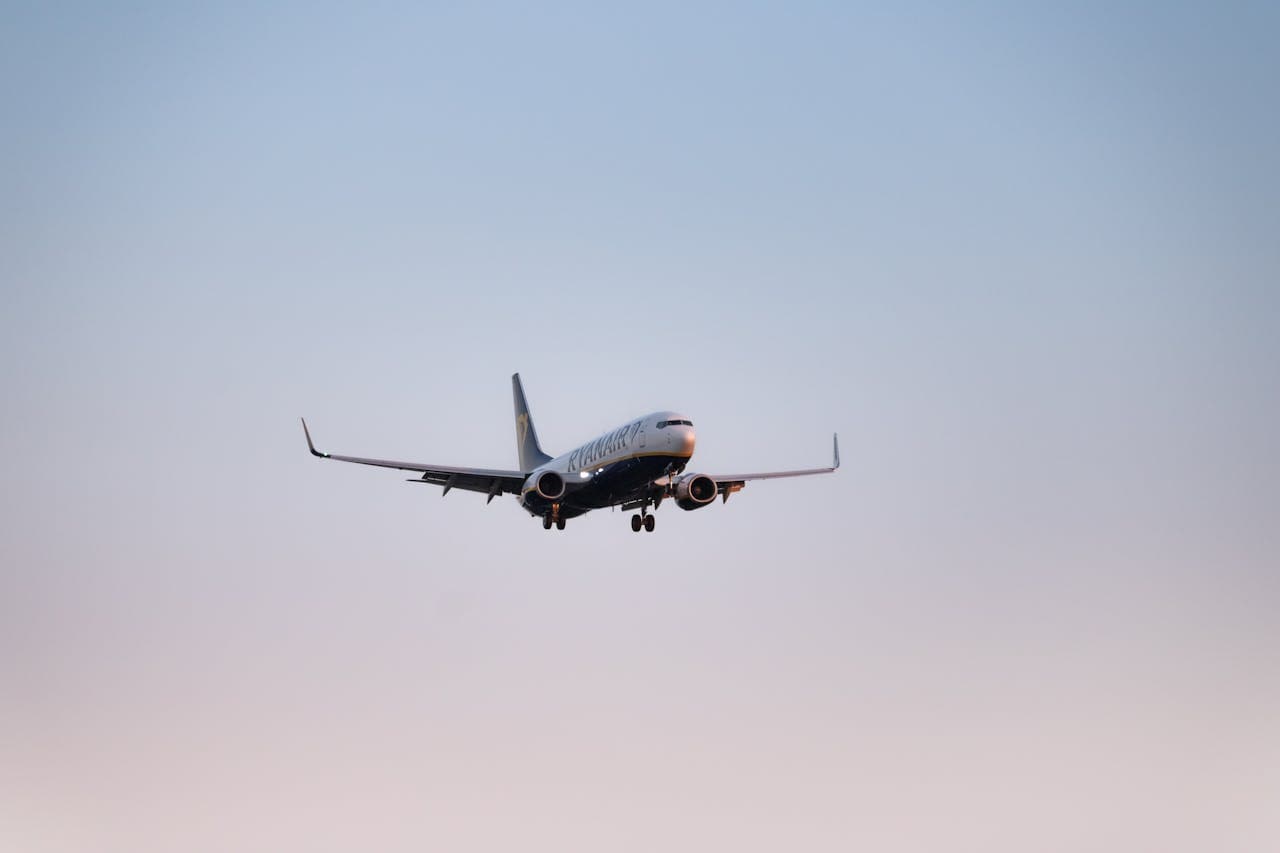
Ryanair is the single largest operator at Valencia Airport, controlling approximately 35 per cent of all traffic from VLC. The airline uses Valencia as a significant base, stationing multiple Boeing 737-8200 aircraft at the airport and operating an intensive daily schedule across dozens of European routes. Each aircraft typically flies five or six sectors per day with turnaround times as short as 25 minutes between landing and the next departure.
This ultra-efficient rotation model is the engine of low-cost air travel — but it creates an operating environment with virtually zero tolerance for delay. A 20-minute delay on a Ryanair aircraft's first morning rotation from Valencia compounds through every subsequent flight that aircraft operates throughout the day. By evening, cumulative delays of two to four hours are common, with passengers on the last flight bearing the full burden of an entire day's accumulated disruptions.
Claim impact: An airline's internal scheduling model and turnaround strategy are commercial business decisions, not forces of nature. When Ryanair's tight rotation causes your evening flight from Valencia to depart three hours late because the aircraft was delayed on its first sector at 06:00, that is unequivocally the airline's responsibility under EU261. European courts have ruled on this principle with clarity and consistency. Knock-on rotation delay claims against Ryanair at Valencia are among the strongest in aviation law.
Mediterranean Levante Weather: Sea Storms, Gota Fría, and Coastal Fog
Valencia's coastal Mediterranean location creates a distinctive weather profile that differs significantly from Spain's interior airports. Three primary weather phenomena affect operations at VLC:
Sea-breeze storms (June–September): During the hot summer months, intense solar heating of the coastal land creates powerful thermal differentials with the cooler Mediterranean Sea. This generates sudden, violent afternoon thunderstorms that can develop within 30 minutes and deliver heavy rain, strong gusts, and occasionally hail. These storms typically pass within one to two hours but can temporarily close the airport's single runway.
Gota fría / DANA events (September–November): The gota fría — officially designated as a Depresión Aislada en Niveles Altos (DANA) — is a weather phenomenon where a pool of cold air aloft becomes cut off from the general atmospheric circulation and interacts with the warm Mediterranean Sea to produce catastrophic rainfall. Valencia province is one of the areas most affected by DANA events in all of Europe, with some events delivering over 300 mm of rain in a single day. These events can cause flooding on and around the airport, runway closures, and widespread transport disruption.
Coastal fog (October–February): Cool Mediterranean air interacting with the warmer land surface during autumn and winter mornings produces advection fog along the Valencian coast. This fog can reduce visibility below instrument landing minimums and persist until mid-morning solar heating dissipates it.
Claim impact: All three of these weather patterns are thoroughly documented in decades of meteorological records from AEMET (Agencia Estatal de Meteorología). Airlines operating seasonal schedules from Valencia know exactly when sea-breeze storms are likely, when the DANA season occurs, and when coastal fog is prevalent. Building adequate weather buffers into Valencia schedules is a basic airline responsibility. While a truly extraordinary DANA event of historic severity might constitute an extraordinary circumstance, routine seasonal weather at VLC is entirely foreseeable. Avioza verifies actual METAR data, AEMET alerts, and airport operational logs for every Valencia weather claim.
Las Fallas Festival Demand Surges
Las Fallas — Valencia's internationally renowned festival of fire, art, and pyrotechnics — runs from 1 to 19 March every year, culminating in the spectacular Cremà when hundreds of enormous artistic monuments are burned simultaneously on the night of 19 March. The festival draws over two million visitors to a city with a resident population of around 800,000, creating an extraordinary surge in air travel demand.
During Las Fallas, Valencia Airport operates at or beyond its designed capacity. Airlines add extra frequencies, charter services proliferate, and load factors approach 100 per cent. Check-in halls become congested, security queues lengthen, gate areas overflow, and ground handling resources are stretched to breaking point. Aircraft turnaround times frequently exceed their scheduled duration as ground crews struggle to service the increased volume of flights.
Claim impact: Las Fallas has been celebrated on the same dates for over a century. Every airline operating from Valencia during March knows exactly what demand conditions to expect. Delays caused by festival-period overcrowding, insufficient ground handling resources, crew scheduling failures during the peak, or aircraft positioning problems are operational failings within the airline's control — not extraordinary circumstances. These claims succeed consistently.
Single-Runway Operations and Capacity Constraints
Valencia Airport operates with a single runway designated 12/30, measuring 3,215 metres in length. While adequate for virtually all commercial aircraft types, the single-runway configuration means that every take-off and landing must share one strip of tarmac. During peak hours — particularly the morning departure bank from 06:00 to 09:00 and the afternoon arrival wave — aircraft queue for departure clearance while inbound flights hold in approach patterns.
Any disruption to runway operations — a bird strike, a technical issue with a taxiing aircraft, debris clearance, or a runway inspection — immediately cascades through the entire schedule. Unlike dual-runway airports that can absorb disruptions by shifting traffic to the second runway, Valencia has no such flexibility.
Claim impact: Airlines operating from Valencia accept the single-runway constraint when they schedule flights at VLC. Runway congestion, departure queues, and capacity-related delays are operational challenges that airlines must manage through scheduling, not extraordinary circumstances that exempt them from compensation. European courts have upheld this principle consistently.
Disrupted at Valencia Airport?
Specialists in Ryanair, Vueling, and all VLC airline claims
Step-by-Step: How to Claim Compensation for Your Valencia Flight
Filing a compensation claim through Avioza takes less than three minutes and involves absolutely no upfront cost:
Gather your documentation — Collect your booking confirmation or e-ticket, boarding pass (physical or digital), and any communications from the airline regarding the disruption. Photographs of departure boards showing delays, airline app screenshots, and social media posts from the day provide useful supplementary evidence.
Verify your eligibility — Use our online tool to enter your flight number and travel date. We instantly cross-reference official aviation data to confirm EU261 coverage, calculate route distance, and verify the actual delay duration down to the minute.
Submit your claim — Complete the claim form with your personal and payment details. Our specialist legal team begins work on your case immediately.
We handle everything — We contact the airline, present the legal basis for your claim, and manage all correspondence. When airlines reject valid claims — as Ryanair does systematically — we escalate through AESA, alternative dispute resolution, or the Spanish commercial courts.
You receive payment — Compensation is transferred directly to your bank account, less our success fee. If we do not win your case, you pay absolutely nothing.
Your Immediate Rights While Stranded at Valencia Airport
Before compensation enters the picture, airlines have immediate duty-of-care obligations when your flight is disrupted at Valencia:
Meals and refreshments appropriate to the time of day
Overnight delay
Hotel accommodation and transport to and from the hotel
Any delay
Two free communications — phone calls, emails, or text messages
Cancellation
Choice of full refund within 7 days or re-routing to your destination
If the airline fails to provide care at Valencia — particularly common with budget carriers during peak disruption periods — purchase necessities yourself at reasonable cost, retain all receipts, and reclaim the expenses as a separate claim alongside your compensation.
Time Limits and Legal Framework for Valencia Claims
Valencia Airport is in Spain, so Spanish civil law governs the limitation period:
Jurisdiction
Time Limit
Legal Basis
Spain
5 years
Código Civil, Article 1964
Other EU countries
Varies (1–6 years)
Depends on airline's country of registration for inbound non-Spanish flights
Spain's five-year limitation period is among the most passenger-friendly in the European Union. However, we strongly advise against waiting. Airlines routinely purge operational data, maintenance logs, crew rosters, and delay causation records after two to three years. Filing promptly preserves critical evidence and significantly increases the likelihood of a straightforward settlement.
AESA enforcement: The Agencia Estatal de Seguridad Aérea accepts complaints online in both Spanish and English. While AESA cannot order direct compensation payments, filing a complaint creates an official record and can pressure airlines into settlement. Avioza files AESA complaints as part of our standard escalation process when airlines refuse to engage.
Why Choose Avioza for Your Valencia Airport Claim
Deep Valencia expertise — we understand the specific operational patterns, weather challenges, and airline behaviours at VLC including Ryanair's dominant position and seasonal demand fluctuations
No win, no fee — you bear absolutely zero financial risk throughout the entire claims process
We challenge every excuse — when Ryanair cites generic weather or Vueling blames air traffic control, we verify actual METAR data, AEMET records, and Eurocontrol flow data for your specific flight
Full legal escalation — AESA complaints, alternative dispute resolution, and Spanish court proceedings (Juzgados de lo Mercantil) when airlines refuse to pay voluntarily
Bilingual processing — our team handles claims in both English and Spanish, navigating the Spanish legal system on your behalf
Frequently Asked Questions
Does EU261 apply to all flights departing Valencia Airport?
Yes, without any exception. EU Regulation 261/2004 applies to every single flight departing Valencia Airport regardless of which airline operates it. Because Spain is a full member state of the European Union, all departures from VLC are automatically covered — this includes European carriers such as Ryanair, Vueling, easyJet, and Iberia, as well as non-EU airlines operating routes from Valencia. For inbound flights arriving at Valencia from outside the EU, the regulation applies when the operating airline is registered in an EU member state. Since Valencia's traffic is dominated by EU-registered carriers like Ryanair (Ireland), Vueling (Spain), and easyJet (though post-Brexit, easyJet's Austrian subsidiary easyJet Europe operates many EU routes), the vast majority of both outbound and inbound flights are fully covered.
How much compensation can I claim for a delayed or cancelled Valencia flight?
Under EU261, compensation is calculated solely by the great-circle distance of your flight route and is entirely independent of your ticket price. For short-haul flights under 1,500 km — such as Valencia to Barcelona, Palma de Mallorca, or Marseille — you can claim €250 per passenger. For medium-haul flights between 1,500 km and 3,500 km — such as Valencia to London, Amsterdam, Berlin, or Marrakech — the amount rises to €400 per passenger. For long-haul flights exceeding 3,500 km — including any connecting journeys booked on a single ticket — compensation reaches €600 per passenger. A couple delayed on a medium-haul flight from Valencia to London would claim €800 total. Children with their own seat receive the full amount.
My flight was disrupted during Las Fallas in Valencia — can I claim compensation?
Absolutely. Las Fallas — Valencia's spectacular annual festival running from 1 to 19 March — draws over two million visitors to the city and creates enormous demand spikes at Valencia Airport. Airlines add extra frequencies, load factors reach 100 per cent, and the entire airport operation runs at maximum capacity. However, the Fallas dates are fixed, published years in advance, and have been a feature of Valencia's calendar for centuries. Airlines scheduling operations during Las Fallas know exactly what demand pressures to expect. Delays caused by overcrowded terminals, insufficient ground handling resources, crew scheduling failures, or aircraft rotation bottlenecks during the festival are operational failings, not extraordinary circumstances. These claims are consistently successful.
Can airlines blame Valencia's Mediterranean weather for my delay?
Only in genuinely exceptional cases. Valencia sits on Spain's Mediterranean Levante coast, an area subject to well-documented weather patterns including sudden afternoon sea-breeze storms (particularly June through September), the gota fría or DANA phenomenon that brings intense torrential rainfall (mainly September through November), and coastal morning fog during autumn and winter. While a truly unprecedented weather event of historic severity might qualify as an extraordinary circumstance, routine Mediterranean weather at Valencia is entirely foreseeable. Airlines with operational history at VLC have decades of meteorological data. If other airlines operated normally during the same weather window while yours cancelled, the extraordinary circumstance defence collapses. Avioza verifies actual METAR data and AEMET records for every weather-related Valencia claim.
How long do I have to file a compensation claim for a Valencia flight?
Under Spanish civil law, specifically Article 1964 of the Código Civil, you have five years from the date of the disrupted flight to file a compensation claim. This five-year limitation period applies to all flights departing Valencia Airport regardless of the airline's country of registration. Spain's five-year window is among the most generous in the European Union — compare it to just one year in Belgium or two years in the Netherlands. Despite this favourable deadline, we strongly recommend filing as soon as possible. Airlines routinely dispose of operational records, crew logs, and maintenance documentation after two to three years, making it progressively harder to counter airline defences the longer you wait.
Who enforces EU261 at Valencia Airport and how do I file a complaint?
The Agencia Estatal de Seguridad Aérea (AESA) is Spain's designated national enforcement body for EU261 passenger rights. AESA accepts complaints in both Spanish and English through its online portal. However, it is essential to understand AESA's limitations: the agency can investigate airlines, conduct compliance audits, and impose administrative fines for systematic violations, but it cannot order an airline to pay compensation directly to an individual passenger. For monetary compensation, you must negotiate with the airline, use a professional claims service like Avioza, or pursue the matter through the Spanish commercial courts (Juzgados de lo Mercantil). Avioza handles the entire process including AESA complaints and court filings when necessary, all on a no-win-no-fee basis.
Ready to Claim Your Compensation?
It takes less than 3 minutes to check. No win, no fee.
Was your flight at Lentoasema (JYV) delayed or cancelled? Under EU Regulation 261/2004, you may claim up to €600. 1. Gather documents 2. Free eligibility check
Was your flight at Lentoasema (MHQ) delayed or cancelled? Under EU Regulation 261/2004, you may claim up to €600. 1. Gather documents 2. Free eligibility check
Karpathos Island National Airport (AOK) is one of Greece's most remote and operationally challenging aviation hubs, nestled in the Dodecanese archipelago between Rhodes and Kastellorizo. Serving the windswept island of Karpathos, this small airport handles seasonal international charters, domestic connections, and increasingly unpredictable flight disruptions due to severe weather and limited operational capacity.