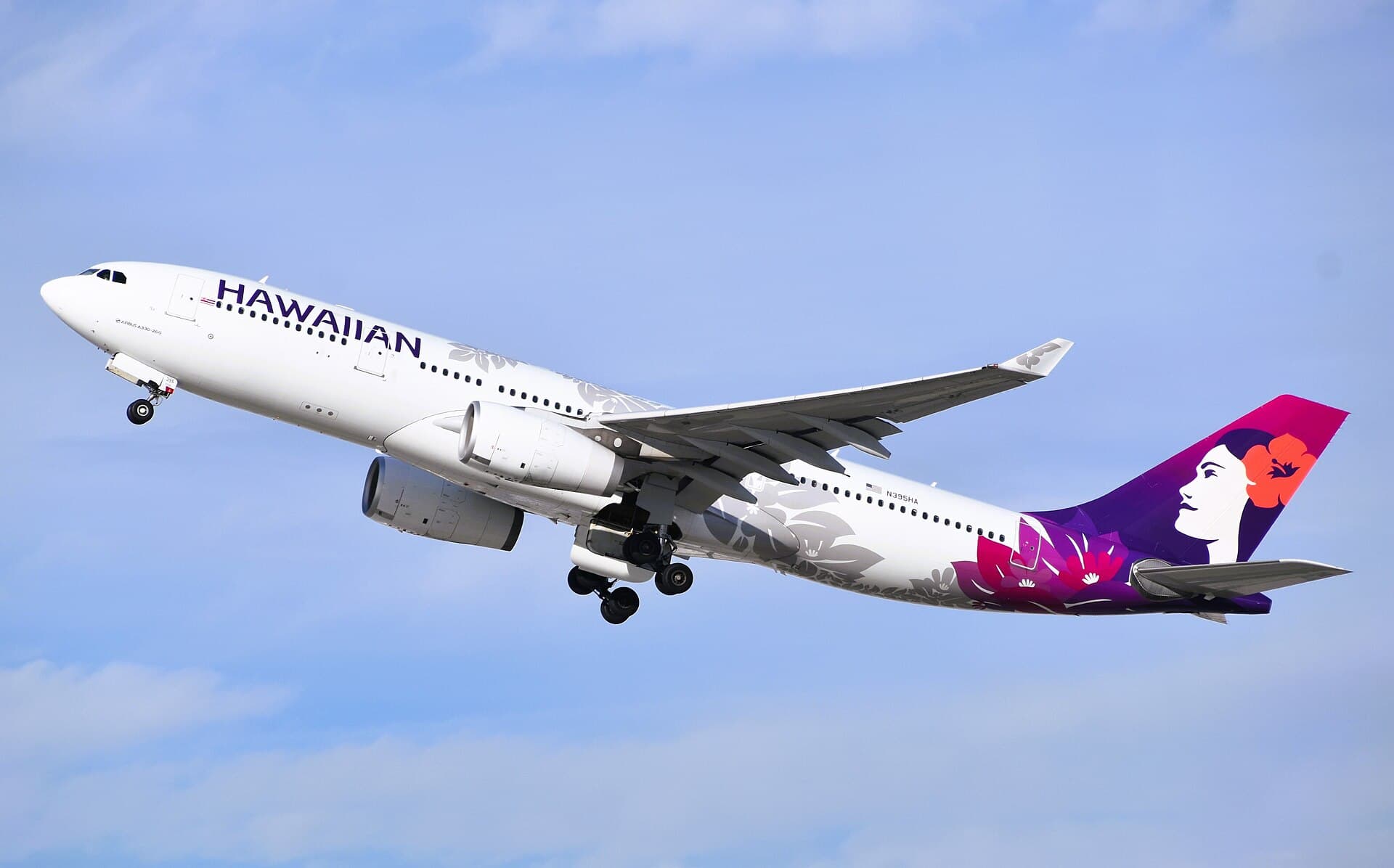
Hawaiian Airlines (IATA: HA, ICAO: HAL) is America's longest-serving carrier to Hawaii, founded in 1929 and headquartered at Honolulu's Daniel K. Inouye International Airport (HNL). The airline operates a mixed fleet of Airbus A321neo narrowbodies for interisland and US mainland routes, alongside Airbus A330 widebodies for transpacific flights to Japan, South Korea, Australia, New Zealand, and Tahiti. In 2024, Hawaiian Airlines completed a landmark merger with Alaska Airlines, becoming part of the Alaska Air Group while retaining its brand, flight codes, and separate operational identity.
For the overwhelming majority of Hawaiian Airlines passengers, EU Regulation 261/2004 does not apply. EU261 covers flights departing from EU or UK airports, and Hawaiian Airlines currently operates no scheduled service from any European airport. Its international network is entirely Pacific-focused. However, a significant number of passengers fly Hawaiian Airlines on transpacific routes governed by the Montreal Convention, and all passengers on US domestic and US-departing international flights are protected by US DOT passenger rights regulations — some of the strongest mandatory protections ever enacted for air travel consumers.
Understanding which legal framework governs your specific Hawaiian Airlines flight is the first and most important step to a successful compensation claim. Whether you were stuck on a tarmac in Honolulu, involuntarily bumped from a flight to Maui, or stranded in Tokyo after a cancelled A330 service, this guide explains exactly what you are owed, how to claim it, and what to do when Hawaiian Airlines pushes back.
Claim Your Hawaiian Airlines Compensation
- Free eligibility check — find out in minutes if your flight qualifies
- No win, no fee — you pay nothing unless we recover your compensation
- Our specialists handle EU261, US DOT, and Montreal Convention claims