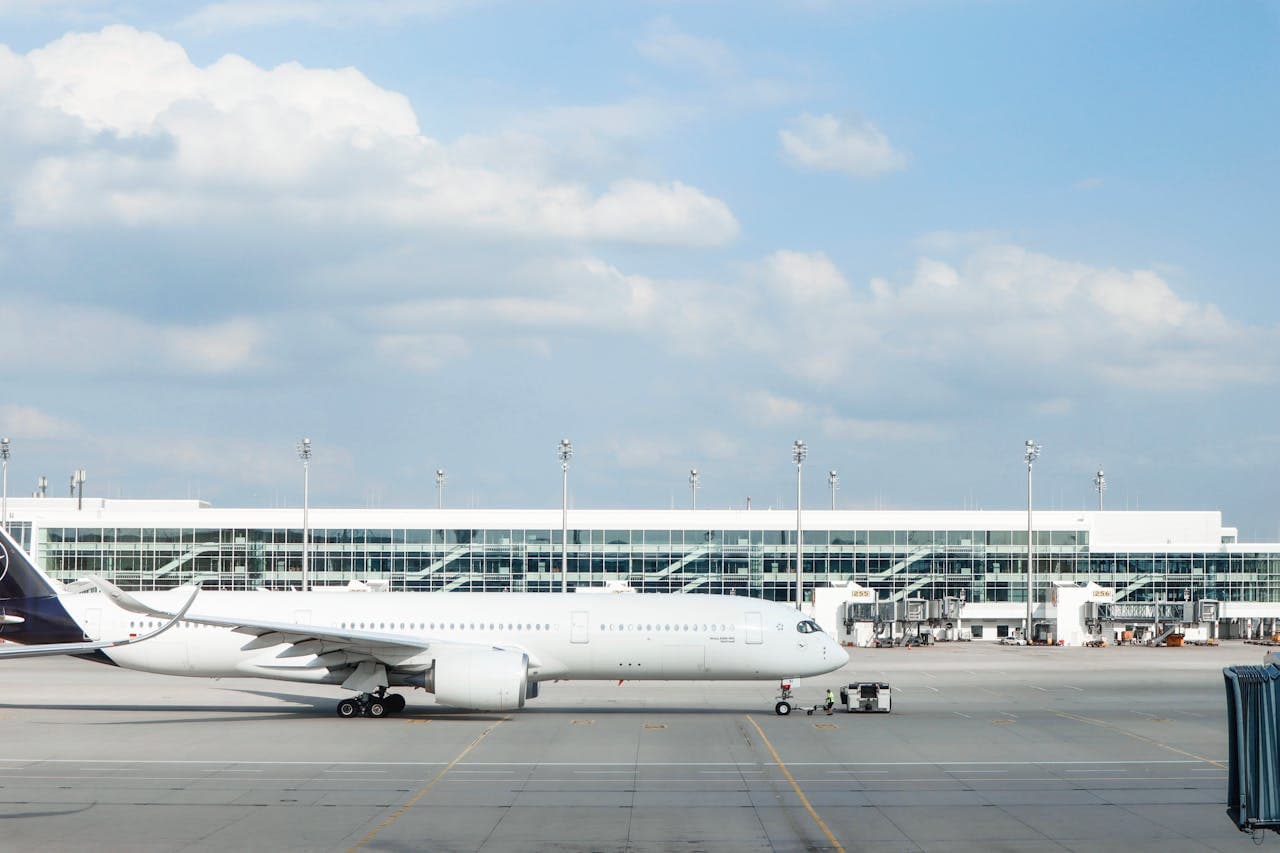
Bucharest Henri Coandă sits at just 96 metres elevation on one of Europe's largest plains. Unlike airports nestled in valleys or shielded by hills, OTP is completely exposed. There is nothing between the airport and the Ukrainian steppe to the northeast, nothing between it and the Danube Basin to the south. Weather systems roll across this flat terrain unimpeded, creating conditions that are both predictable in their seasonal patterns and dramatic in their individual events.
Autumn and Winter Fog: The Wallachian Blanket
From October through February, the Wallachian Plain is notorious for radiation fog. Cold air settles over the flat terrain on clear nights, moisture from the Danube river system condenses, and by morning, a thick fog blanket can reduce visibility to under 100 metres across the entire southern Romanian plain.
Unlike coastal fog (which tends to burn off quickly), Wallachian fog can persist for days during stable high-pressure periods. The airport's ILS (Instrument Landing System) allows operations in reduced visibility, but when conditions drop below CAT IIIa minimums, landings are suspended entirely. Departures may continue, but arriving aircraft divert to Cluj, Timișoara, or even Budapest.
Claim impact: Airlines operating winter schedules from Bucharest are fully aware of the fog risk. While genuine zero-visibility conditions constitute an extraordinary circumstance, the ripple effects — late-arriving aircraft, crew duty time expirations, and schedule cascades — are operational failures that airlines must manage. If the fog lifted at 10 AM but your afternoon flight was still delayed because the airline failed to reposition its aircraft, your claim is strong.
Summer Thunderstorms: The Convective Trap
Between June and September, the Wallachian Plain becomes a convective hotspot. The flat terrain heats rapidly under the summer sun, moisture from the Black Sea and Danube feeds storm development, and by mid-afternoon, powerful cumulonimbus towers can build to 40,000 feet. These storms produce dangerous lightning, heavy rain, hail, and severe wind shear — all hazards that ground flights immediately.
OTP's exposure means these storms can approach from any direction. Unlike airports surrounded by mountains (where storms follow predictable valley patterns), the Wallachian Plain allows storm cells to develop and travel freely. An airport that was clear at 2 PM can be in the middle of a violent thunderstorm by 3:30 PM.
Claim impact: Individual storm events are generally extraordinary circumstances. However, the seasonal pattern is well-known. Airlines that schedule tight turnarounds at OTP during summer afternoons — when storms are most likely — are making an operational choice. If your delay resulted from poor scheduling during known storm windows rather than from an actually occurring storm, your claim has merit.
Winter Blizzards: The Eastern Winds
When cold Polar or Siberian air masses push southwest across Ukraine and Moldova, Bucharest can experience sudden and severe winter storms. Temperatures plummet to -15°C or below, heavy snow can accumulate rapidly, and the flat plain offers no shelter from driving easterly winds. De-icing operations extend turnaround times significantly, and snow removal on the exposed runways and taxiways is a continuous battle.
Claim impact: Severe blizzards are extraordinary circumstances. However, winter weather in Bucharest is neither rare nor unexpected. Airlines that fail to pre-position adequate de-icing equipment, that schedule insufficient ground time for winter operations, or that do not have contingency plans for well-forecast winter storms are not meeting their operational obligations.