Nuremberg Airport (NUE) Flight Compensation: Complete Guide to Your EU261 Rights
Avioza Team8 min read
No Win, No Fee98% Success RateEU-Wide Coverage
Key Takeaways
EU261 applies to ALL flights departing Nuremberg on any airline — Germany is an EU member state with full passenger protection
Nuremberg handles 4.5 million passengers annually as Bavaria's second airport, but its single 2,700m runway and Franconian fog basin create regular delays
Compensation ranges from €250 to €600 per passenger depending on flight distance — a family of four on a Mediterranean holiday flight could claim €1,000 or more
The Luftfahrt-Bundesamt (LBA) enforces EU261 in Germany — you can escalate rejected claims free of charge, and the SÖP offers free arbitration
German law gives you 3 years to file (BGB §195), with the clock starting at year-end — but acting quickly preserves boarding passes and airline records
Nuremberg Airport (NUE), officially named Albrecht Dürer Airport after the city's most famous son, is Bavaria's second-busiest airport and a vital gateway for the entire Franconian region of northern Bavaria. Handling approximately 4.5 million passengers annually, NUE serves a catchment area that includes Nuremberg, Erlangen, Fürth, Bamberg, and Bayreuth — a metropolitan region of over 3.5 million people who would otherwise need to travel two hours south to Munich.
But Nuremberg's combination of a single runway, a fog-prone geographical basin, and seasonal demand spikes creates a disruption profile that catches many travellers off guard. If your flight at Nuremberg Airport was delayed by more than 3 hours, cancelled without adequate notice, or you were denied boarding, you are very likely entitled to up to €600 in compensation under EU Regulation 261/2004. Germany is an EU member state, and the regulation applies comprehensively to all departures from NUE.
How EU261 Applies at Nuremberg Airport
As an airport within the European Union, Nuremberg provides full passenger protection under EU261. Here is exactly how coverage works:
Your Flight
EU261 Applies?
Why
Nuremberg → anywhere on any airline
Yes
All departures from EU airports are covered regardless of airline nationality
Non-EU → Nuremberg on EU airline (e.g., Eurowings)
Yes
EU-carrier arrivals from outside the EU are covered
Non-EU → Nuremberg on non-EU airline (e.g., SunExpress)
No
Non-EU carrier arriving from non-EU origin is not covered
The critical point many passengers miss: even flights on Turkish carriers like SunExpress or Corendon are fully covered when departing from Nuremberg, because EU261 protection is triggered by the departure airport being within the EU. Airlines occasionally try to suggest otherwise — do not accept this.
Disrupted at Nuremberg Airport?
We handle all NUE airlines including Ryanair and Corendon
EU261 compensation is determined solely by the great-circle distance of your flight:
Route Type
Distance
Example from NUE
Amount
Short-haul
Under 1,500 km
Nuremberg → London, Barcelona, Vienna
€250
Medium-haul
1,500 – 3,500 km
Nuremberg → Antalya, Hurghada, Canary Islands
€400
Long-haul
Over 3,500 km
Nuremberg → Dubai (if operated)
€600
These amounts are per passenger including children with a purchased seat. A couple returning from a disrupted holiday flight to Antalya (approximately 2,100 km) would be entitled to €800 combined. The compensation is completely independent of the ticket price — even a €29 Ryanair fare generates a €250 claim on short-haul routes.
What Causes Disruptions at Nuremberg Airport
Understanding the specific challenges at NUE helps you assess the strength of your compensation claim.
The Franconian Fog Basin
Nuremberg sits at approximately 310 metres elevation in the Franconian basin, a broad, low-lying area framed by the Franconian Jura to the east, the Steigerwald hills to the west, and the Franconian Switzerland uplands to the north. This basin geography is a textbook fog trap. During autumn and winter, radiative cooling on clear nights causes temperature inversions that lock cold, moist air close to the ground. The Pegnitz and Rednitz rivers, which converge in central Nuremberg, add moisture to the lower atmosphere.
The result: dense fog events that can reduce visibility below the 550-metre Category I approach minimum for hours or even entire days. When this happens, aircraft cannot land, departures stack up, and the schedule collapses.
Claim impact: While individual fog events may be argued as extraordinary circumstances, the pattern is entirely predictable. Nuremberg records fog on approximately 60 days per year, concentrated between October and March. Airlines operating from NUE during these months are expected to build buffer time into their schedules and have contingency plans. If the airline's disruption response was inadequate relative to the actual weather conditions, your claim is strong.
Single Runway Vulnerability
Unlike major German hubs like Frankfurt (four runways) or Munich (two runways), Nuremberg has a single runway — 2,700 metres long, oriented 10/28. This means:
Zero redundancy: any closure shuts the entire airport
Aircraft limitations: the runway length restricts operations to narrowbody aircraft and smaller widebodies
Capacity ceiling: peak-hour movements are capped by the single-runway throughput
Maintenance windows: runway inspections and repairs must be scheduled during already-tight windows
A single bird strike, a tyre burst on landing, or a runway surface inspection can halt all operations at NUE. These are operational events within the airline-airport ecosystem's control.
Claim impact: Single-runway closures are not extraordinary circumstances. They are a known limitation of the airport infrastructure, and airlines choosing to operate from NUE accept this constraint. Delays caused by runway closures are almost always compensable.
Christkindlesmarkt Seasonal Surge
Nuremberg's Christkindlesmarkt is one of the world's most famous Christmas markets, drawing over 2 million visitors during its four-week run from late November to 24 December. Airlines respond with additional charter flights and seasonal scheduled services, particularly from the United Kingdom, Scandinavia, and the Netherlands.
This demand spike collides with the worst of the fog season and the shortest days of the year, creating a perfect storm of disruption potential. The single runway is under maximum pressure just as weather conditions are at their least reliable.
Claim impact: Seasonal demand is entirely predictable and within airline planning. Scheduling additional flights into a fog-prone, single-runway airport in December is a commercial decision with known risks. Resulting disruptions are compensable.
Disrupted at Nuremberg Airport?
We handle all NUE airlines including Ryanair and Corendon
Even before financial compensation, airlines have immediate care obligations during disruptions at NUE:
Meals and refreshments after 2 hours for short-haul flights or 3 hours for medium and long-haul
Hotel accommodation for overnight delays, including transport between the airport and hotel
Two free communications — phone calls, emails, or text messages
Full refund or re-routing if your flight is cancelled — the airline must offer the choice
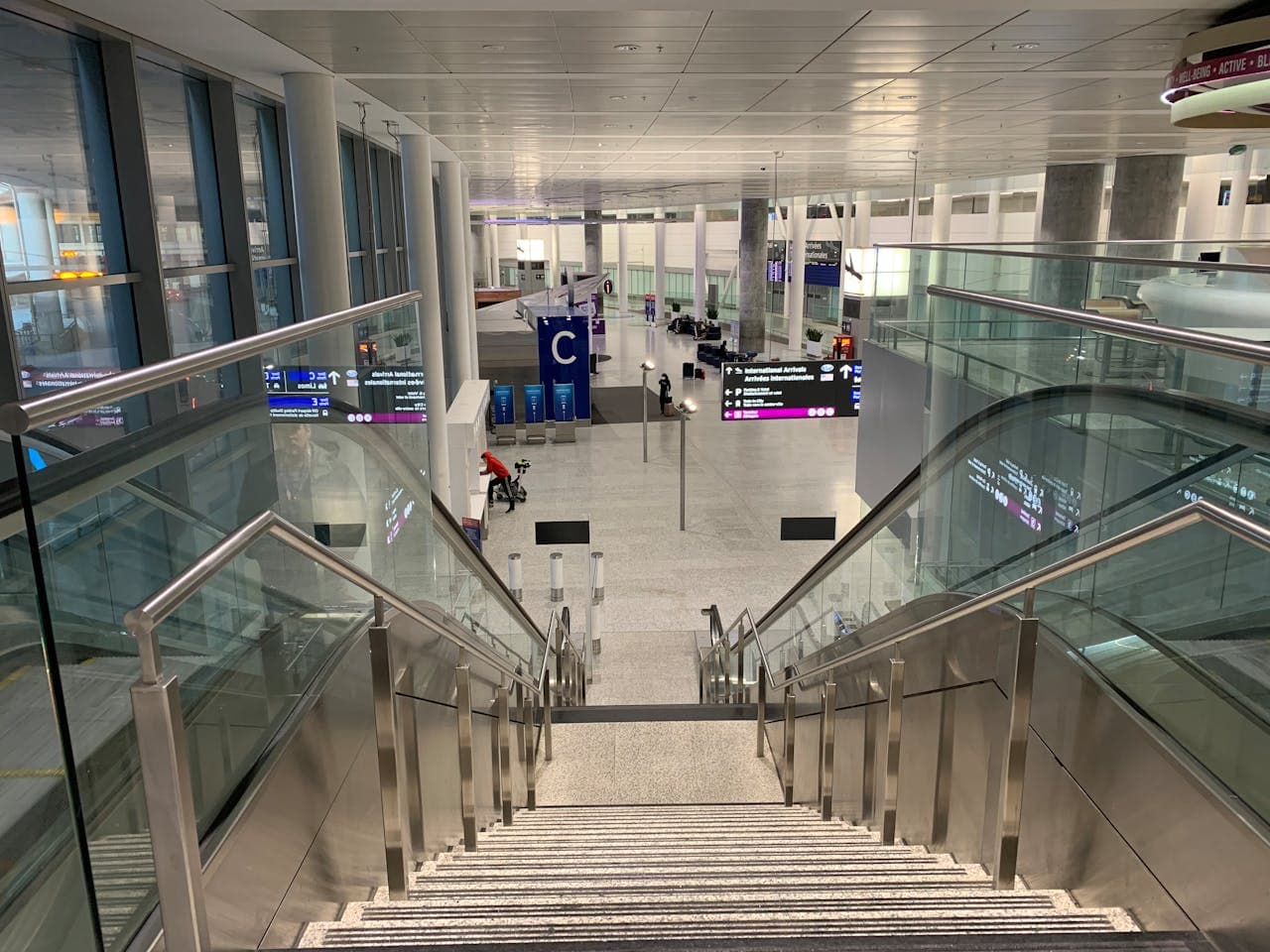
Nuremberg is a compact, modern terminal with reasonable facilities, but do not let this substitute for your legal entitlements. The airline must provide care proactively — you should not have to purchase your own meals and claim reimbursement later, although you can do so if the airline fails in its duty.
The LBA and SÖP: Your Escalation Options
Germany offers passengers two powerful escalation routes when airlines refuse valid claims:
Luftfahrt-Bundesamt (LBA)
The LBA is Germany's national aviation authority and the designated enforcement body for EU261. You can file a complaint free of charge through their online portal. The LBA investigates the case and can compel airlines to comply. However, the LBA process can take several months.
SÖP Arbitration
The SÖP (Schlichtungsstelle für den öffentlichen Personenverkehr) is Germany's official dispute resolution body for passenger transport. Most German airlines participate in SÖP arbitration, which is free for passengers. SÖP decisions are not legally binding but are accepted by airlines in the vast majority of cases.
Using Avioza means we handle both escalation paths on your behalf — we know which airlines respond to LBA pressure and which are better approached through SÖP.
Time Limits: 3 Years Under German Law
Under BGB §195, the standard limitation period for flight compensation claims in Germany is 3 years. The period begins at the end of the calendar year in which the disruption occurred. A flight disrupted on 5 January 2024 has until 31 December 2027 — nearly four full years.
This is one of the most generous time limits in the EU, but it should not encourage delay. Airlines routinely purge operational records after 12 to 18 months, weather station data becomes harder to obtain, and booking platforms archive old reservations. File your claim as soon as possible after the disruption to maximize your chances of success.
Disrupted at Nuremberg Airport?
We handle all NUE airlines including Ryanair and Corendon
Nuremberg's specific disruption profile — the Franconian fog basin, single-runway vulnerability, and seasonal demand spikes — requires specialist knowledge to counter airline defences effectively.
We know NUE's unique challenges — our team understands Franconian fog patterns, runway limitations, and seasonal dynamics
No win, no fee — you pay nothing unless we successfully recover your compensation
LBA and SÖP expertise — we escalate through the right channel based on each airline's response patterns
All NUE airlines covered — Ryanair, Eurowings, Corendon, SunExpress, TUI fly, and every other carrier
Fast processing — most Nuremberg claims are resolved within 6 to 8 weeks
Franconian fog defence specialists — we challenge weather-based rejections with actual METAR data from NUE
Frequently Asked Questions
Does EU261 apply to all flights at Nuremberg Airport?
Yes — EU261 applies to every flight departing Nuremberg regardless of the airline's nationality or registration. Whether you fly Ryanair to London, Corendon to Antalya, or SunExpress to Izmir, all departures from NUE are fully covered. For flights arriving in Nuremberg from outside the EU, the regulation applies only if the operating airline is EU-registered. Since Nuremberg primarily serves leisure and European destinations, the overwhelming majority of its flights are fully covered by EU261.
How much compensation can I get for a delayed flight from Nuremberg?
Under EU261, compensation is based solely on flight distance: €250 for flights under 1,500 km (e.g., Nuremberg to London or Barcelona), €400 for flights between 1,500 and 3,500 km (e.g., Nuremberg to Antalya, Hurghada, or the Canary Islands), and €600 for flights over 3,500 km if any are operated from NUE. These amounts are per passenger, including children who have their own seat. Your flight must arrive at the final destination more than 3 hours late for the compensation right to activate.
My Nuremberg flight was delayed because of fog — can I still claim compensation?
Nuremberg sits in the Franconian basin, a low-lying area surrounded by the hills of Franconian Switzerland, the Franconian Jura, and the Steigerwald. This geography creates a natural fog trap, especially from October through March when cold air pools in the basin overnight. While airlines may argue fog is an extraordinary circumstance, Franconian fog is seasonal, well-documented, and entirely predictable. Airlines scheduling flights from NUE in winter are expected to account for it. If delays exceeded the actual fog duration or the airline failed to rebook you promptly, your claim is strong. We verify actual METAR weather data for every case.
What happens during the Christkindlesmarkt charter season at Nuremberg?
Nuremberg's world-famous Christmas market (Christkindlesmarkt) runs from late November through Christmas Eve and generates a significant surge in charter and scheduled flights. Airlines add seasonal routes specifically for Christmas market visitors from the UK, Scandinavia, and elsewhere. This concentrated demand on a single-runway airport creates capacity pressure that frequently leads to delays. Importantly, these delays are entirely foreseeable — airlines choose to operate additional services knowing the airport's limitations. Disruptions during the Christkindlesmarkt season are generally compensable under EU261.
Does Nuremberg's short runway affect my compensation rights?
Nuremberg's single runway is 2,700 metres long — adequate for narrowbody aircraft like the A320 and 737, but limiting for larger widebody planes. This restricts the airlines and aircraft types that can serve NUE. More importantly, the single runway means there is zero redundancy: any runway closure for maintenance, inspection, or incident shuts the entire airport. If your flight was delayed because the runway was temporarily closed, this is an operational issue within the airport's and airline's control, not an extraordinary circumstance, and your claim should succeed.
How do I file a compensation claim for a disrupted Nuremberg flight?
Filing with Avioza takes under three minutes. Enter your flight details in our eligibility checker — we instantly verify EU261 coverage, route distance, and delay duration. If eligible, complete the claim form and our legal team handles everything from there. We contact the airline, present the legal basis, and manage all correspondence. If the airline rejects unfairly, we escalate to the LBA or SÖP arbitration. You pay nothing unless we win — our fee is deducted only from successful compensation payments.
Ready to Claim Your Compensation?
It takes less than 3 minutes to check. No win, no fee.
Was your flight at Lentoasema (JYV) delayed or cancelled? Under EU Regulation 261/2004, you may claim up to €600. 1. Gather documents 2. Free eligibility check
Was your flight at Lentoasema (MHQ) delayed or cancelled? Under EU Regulation 261/2004, you may claim up to €600. 1. Gather documents 2. Free eligibility check
Karpathos Island National Airport (AOK) is one of Greece's most remote and operationally challenging aviation hubs, nestled in the Dodecanese archipelago between Rhodes and Kastellorizo. Serving the windswept island of Karpathos, this small airport handles seasonal international charters, domestic connections, and increasingly unpredictable flight disruptions due to severe weather and limited operational capacity.