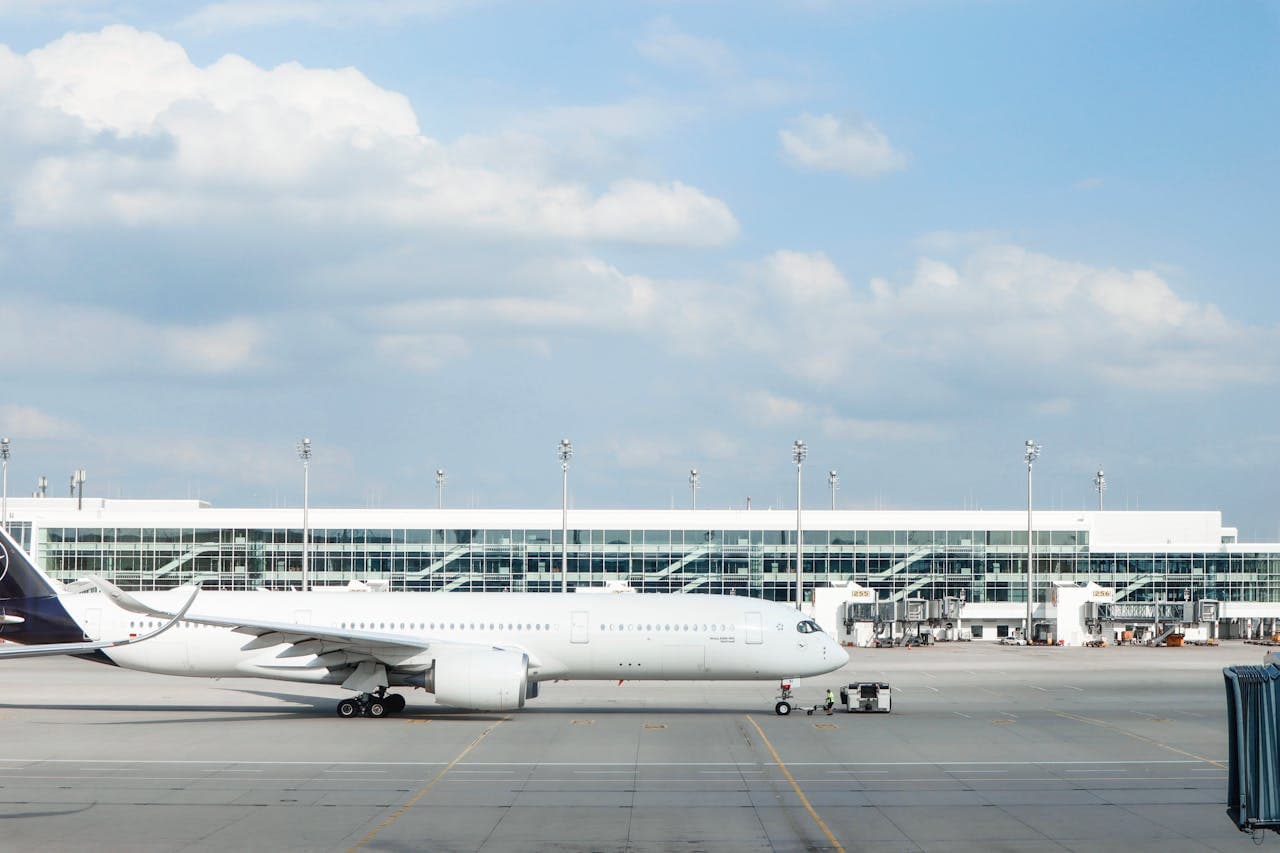
Flight Delay & Cancellation Compensation at Torp Airport
Avioza Team9 min read
No Win, No Fee98% Success RateEU-Wide Coverage
Key Takeaways
Torp Airport is 110 kilometres south of Oslo city centre — the 'Oslo Torp' branding is deliberately misleading marketing, and bus transfer delays frequently cause missed connections and secondary claims
Norway is an EEA member — EU261 fully applies to all flights departing Torp regardless of airline nationality, including Ryanair and Wizz Air base flights
The single runway and regional infrastructure mean weather delays cascade quickly into multi-hour disruptions, especially fog from Oslofjord and winter storms
Duty-of-care obligations are often ignored — passengers stranded by late-night arrivals or missed connections due to transfer delays can claim hotel, meal, and transport costs separately
3-year statute of limitations under Norwegian law — older Torp flights from 2023 and early 2024 may still be worth EUR 250-600 per passenger
Torp Airport, located in Sandefjord 110 kilometres south of Oslo city centre, is one of Scandinavia's most misleadingly branded airports. Marketed as 'Oslo Torp' to lure passengers expecting a convenience close to the capital, Torp actually requires a 1.5 to 2-hour bus transfer to reach Oslo. This geographic reality, combined with a single runway, regional infrastructure constraints, and heavy budget airline operations, creates a perfect storm for flight disruptions — and an equally perfect environment for successful EU261 compensation claims.
With Ryanair and Wizz Air operating multiple daily rotations and limited ground handling capacity, delays cascade through the schedule quickly. Fog from the nearby Oslofjord, winter storms, and de-icing bottlenecks add to the disruption burden. Yet Torp passengers often do not realize they have strong compensation rights — the very factors that cause delays also strengthen their legal claims.
Why Torp Airport Is a Compensation Hotspot
The combination of geography, infrastructure, and business model makes Torp one of Norway's most disruption-prone airports.
The Misleading 'Oslo Torp' Branding Problem
The airport's official name is Torp Airport (Lufthavn Sandefjord Torp), located in Sandefjord municipality. Yet it is marketed as 'Oslo Torp' or 'Oslo Sandefjord Airport' to give passengers the false impression it is a convenient alternative to Oslo Gardermoen Airport. This branding has multiple negative consequences for passengers:
Passengers unfamiliar with Norway assume Torp is close to Oslo city when in reality it is 110 km away
Bus transfers take 1.5-2 hours depending on traffic and road conditions
There are typically only 4-6 scheduled buses per day to Oslo, with evening and early-morning service gaps
If a flight arrives late and misses the last evening bus, passengers face a EUR 50-100 taxi cost or a hotel night
If a connecting flight is missed due to delayed Torp arrival, passengers can claim the costs of missed connections as an Article 7 expense
The deliberate misleading branding is itself a duty-of-care violation — passengers would have chosen Gardermoen if they knew the true distance.
Delayed or Cancelled at Torp Airport?
Not actually in Oslo — 110 km away, bus delays cause missed connections
Ryanair or Wizz Air from Torp? EU261 applies — you deserve EUR 250-600
Fog from Oslofjord or winter weather? Most delays are compensable — predictable seasonal conditions
Missed connection due to late bus arrival? Claim both flight compensation AND transfer costs
3-year time limit in Norway — act now before claims expire
Torp has one main runway (09/27), handling an ever-growing volume of budget airline operations. When Ryanair and Wizz Air layer multiple daily rotations across this single strip, any disruption cascades:
A 10-minute fog delay to the first flight of the day becomes a 40-minute delay to the third flight and a 90-minute delay to the fifth
Winter de-icing backlogs can delay the entire day's schedule by 2-3 hours
Weather diversions to alternate airports (Gardermoen or Stavanger) add 2+ hours to passenger journey times
This infrastructure constraint means weather-related delays are common and severe.
Oslofjord Fog and Maritime Weather
Torp sits close to the coast and Oslofjord, making it vulnerable to persistent maritime fog that does not affect Gardermoen 110 km inland. From late September through March, fog can form rapidly over the fjord and roll across the airport, reducing visibility below 200 metres. The airport has CAT III ILS capabilities, but many budget airline aircraft lack the equipment for low-visibility approaches, forcing diversions or cancellations.
This fog pattern is regular and well-documented — it is not an extraordinary circumstance but a predictable seasonal reality. Airlines should account for it in their scheduling.
Winter Storms and De-Icing Delays
Norwegian winter storms frequently close Torp or severely restrict operations. De-icing capacity is limited — when frost or snow hits, aircraft turnaround time stretches from 25 minutes to 45+ minutes. With dozens of operations per day, this creates massive cumulative delays. Staff shortages in winter (competing with Gardermoen for skilled workers) worsen the problem.
Budget Airline Operational Stress
Ryanair and Wizz Air run minimal turnaround times and offer no buffers in their schedules. A 30-minute delay anywhere becomes a cascading 2-3 hour delay by day's end. These airlines also minimize ground staff, maximizing pressure on Torp's limited handling teams. The result: chronic delays that are entirely within airline control, not extraordinary circumstances.
Your EU261 Rights at Torp Airport
Norway is an EEA member state. EU Regulation 261/2004 applies with full legal force to all flights at Torp Airport:
All departing flights: Every flight leaving Torp is covered, whether operated by Ryanair, Wizz Air, Norwegian Air, SAS, or any other carrier from any country
EU arrival flights: Flights from other EU/EEA airports to Torp are covered regardless of airline
Non-EU arrival flights: Flights from outside the EU/EEA to Torp are covered only if operated by an EU/EEA-registered carrier
Compensation Amounts by Distance
Route Distance
Compensation
Example Routes from Torp
Under 1,500 km
EUR 250
Stockholm, Copenhagen, UK, France, Benelux
1,500 — 3,500 km
EUR 400
Spain, Italy, Greece, North Africa, Middle East
Over 3,500 km
EUR 600
Long-haul (rare from Torp)
When Airlines Must Pay Compensation
You are entitled to compensation when:
Your flight is cancelled with less than 14 days advance notice
Your flight arrives more than 3 hours late at the final destination
You are denied boarding involuntarily due to overbooking
Airlines are exempt only if the disruption was caused by genuine extraordinary circumstances beyond their reasonable control. The burden of proof lies entirely on the airline.
Additional Compensation Under Duty of Care (Articles 8-9)
Beyond the fixed €250-600 tiers, EU261 Articles 8 and 9 require airlines to provide or reimburse:
Meals and refreshments: If a delay is 2+ hours and the airline does not provide them, you can claim reimbursement
Hotel accommodation: If an overnight stay is necessary due to airline disruption
Transport to/from accommodation: Taxis, buses, or car services to reach a hotel
Communications: Phone calls to notify family of delays
Missed transfer costs: If a bus transfer is missed due to late arrival, the replacement bus ticket cost is reimbursable
Many Torp passengers claim the EUR 50-100 replacement bus transfer to Oslo as a separate expense when they miss the last evening bus due to a delayed arrival.
If an airline refuses your EU261 claim, you can file a complaint with Transportklagenemnda (the Norwegian Transport Board), which is the national enforcement body for aviation passenger rights. Transportklagenemnda has the authority to:
Investigate airline compliance with EU261
Order airlines to pay compensation if they have wrongfully denied claims
Issue binding decisions that airlines must comply with
Transportklagenemnda is free to use and does not require legal representation. They handle thousands of EU261 disputes annually and have a strong track record of ordering airlines to pay compensation in clear-cut cases like late arrivals or cancellations.
If Transportklagenemnda rules in your favour but the airline refuses to pay, you can escalate to Norwegian courts, which have jurisdiction and consistently enforce EU261.
Delayed or Cancelled at Torp Airport?
Not actually in Oslo — 110 km away, bus delays cause missed connections
Ryanair or Wizz Air from Torp? EU261 applies — you deserve EUR 250-600
Fog from Oslofjord or winter weather? Most delays are compensable — predictable seasonal conditions
Missed connection due to late bus arrival? Claim both flight compensation AND transfer costs
3-year time limit in Norway — act now before claims expire
Runway slot compression: All airlines push morning and evening peaks, creating bottlenecks
Staff vacations: Maintenance and ground handling teams at minimum levels during holiday periods
Low-cost carrier peaks: Ryanair and Wizz Air pack maximum operations into peak summer days
Claiming Compensation: Step by Step
Document everything: Save your booking confirmation, boarding pass, delay proof (photography of departure boards, airline emails, passenger statements), and any receipts for meals, transport, or accommodation
Calculate your entitlement: Determine route distance and corresponding compensation tier (EUR 250/400/600)
Document extraordinary circumstance failures: If the airline blamed weather, check meteorological records to prove conditions were predictable seasonal weather, not extraordinary
Submit initial claim: Write to the airline citing Article 7 of EU261, the compensation tier, and your evidence. Keep a copy of your submission
Wait 6-8 weeks: Airlines have reasonable time to investigate and respond
Escalate to Transportklagenemnda: If the airline refuses or does not respond, file a complaint with Transportklagenemnda (free, online, no legal representation required)
Court action: If Transportklagenemnda rules in your favour and the airline refuses to pay, escalate to Norwegian courts
Use a claims service: Alternatively, submit through Avioza, which handles the entire process, negotiates with airlines, and escalates to Transportklagenemnda or courts if necessary
Why Choose Avioza for Torp Airport Claims
Misleading branding expertise: We understand the 'Oslo Torp' trap and can frame duty-of-care violations related to transfer delays
Oslofjord fog specialists: We access Norwegian meteorological service data and EUROCONTROL records to prove seasonal patterns, not extraordinary circumstances
Ryanair and Wizz Air experience: We know their standard rejection templates, internal claims processes, and Transportklagenemnda history
Transfer cost recovery: We include missed bus transfer claims and replacement transportation expenses in overall compensation packages
Transportklagenemnda navigation: We file complaints directly with Norwegian authorities and handle escalations to courts if necessary
No win, no fee: You pay nothing unless we successfully recover your compensation
3-year lookback: Norwegian statute of limitations allows claims up to 3 years old — Torp flights from 2023 are still valid
Multilingual support: Available in Norwegian, English, and German
Delayed or Cancelled at Torp Airport?
Not actually in Oslo — 110 km away, bus delays cause missed connections
Ryanair or Wizz Air from Torp? EU261 applies — you deserve EUR 250-600
Fog from Oslofjord or winter weather? Most delays are compensable — predictable seasonal conditions
Missed connection due to late bus arrival? Claim both flight compensation AND transfer costs
3-year time limit in Norway — act now before claims expire
Is Torp Airport really in Oslo, and does EU261 apply?
No — Torp is NOT in Oslo. Located 110 kilometres south of Oslo city centre in Sandefjord, it is deliberately branded as 'Oslo Torp' by marketing to attract passengers who believe they are flying to a convenience close to the capital. In reality, the journey from Torp to Oslo city centre takes 1.5 to 2 hours by bus, and there are only a few buses per day. EU261 applies fully to all flights departing Torp, regardless of this misleading branding. Every flight leaving Torp is covered under EU Regulation 261/2004 because Norway is an EEA member state, giving Norwegian passengers exactly the same rights as passengers in France, Germany, or Spain. Airlines cannot use the 'regional airport' excuse to avoid compensation obligations.
Why do so many flights get delayed at Torp Airport?
Torp has a single runway and limited ground infrastructure, creating a bottleneck for the high volume of Ryanair and Wizz Air operations. Fog from Oslofjord affects Torp more than Oslo's main airport Gardermoen because Torp sits lower and closer to maritime weather systems. Winter storms frequently close the runway for hours at a time. De-icing capacity is limited — when frost hits, turnaround times stretch from the normal 25 minutes to 45+ minutes per aircraft, cascading delays through the entire day's schedule. Ground handling staff shortages during summer peaks create further backlogs. Most critically, the bus transfer requirement means passengers arriving late at Torp face additional 1.5-2 hour journeys to reach Oslo, and delayed arrivals often miss the limited evening bus connections, trapping passengers overnight.
My bus transfer from Torp to Oslo made me miss my connection — can I claim?
Yes, absolutely, and this is one of the strongest claim types from Torp. If your Torp flight was delayed, causing you to miss a bus transfer connection and subsequently miss a connecting flight at another airport, you have multiple grounds for compensation. First, if your original Torp flight arrived more than 3 hours late, you qualify for standard EU261 compensation (EUR 250-600 depending on route distance). Second, under Article 9 duty-of-care provisions, the airline must cover your transport costs if the delay was their responsibility — including a replacement bus ticket if the original transfer was missed due to airline delay. Third, if you missed a connecting flight and were forced to pay for a replacement flight, that cost may be recoverable from the original airline under EU261 Article 7. Keep all receipts: original ticket, bus receipts, replacement flight invoice, and any communications from the airline or transfer company.
How much EU261 compensation can I claim from a Torp flight?
EU261 compensation is determined exclusively by flight distance, not ticket price. Flights from Torp under 1,500 km — covering routes to most of Scandinavia, the UK, and France — qualify for EUR 250 per passenger. Flights between 1,500 and 3,500 km — covering most of continental Europe, southern France, northern Africa, and the Middle East — qualify for EUR 400 per passenger. Flights exceeding 3,500 km — covering long-haul routes, though rare from Torp — qualify for EUR 600 per passenger. A family of four on a delayed Torp-to-London flight (approximately 2,100 km) could claim EUR 1,600 total compensation if the flight arrived more than 3 hours late, regardless of whether they paid EUR 20 budget fares or EUR 150 per ticket.
The airline blamed Oslofjord fog or winter weather — does that cancel my claim?
Not necessarily. While genuine and unprecedented severe weather can constitute an extraordinary circumstance, airlines must prove that conditions were truly exceptional rather than seasonally predictable. Oslofjord fog in autumn and winter is a well-documented pattern — it occurs regularly and predictably every year. Winter storms in Scandinavia are not unexpected events either. Courts across Europe have repeatedly ruled that predictable seasonal weather does not qualify as extraordinary circumstance. If other airlines operated successfully during the same conditions, if the weather had cleared but you were still delayed due to cascading knock-on effects, or if the airline failed to take reasonable mitigation steps (such as reducing scheduled operations during a known fog season), your claim remains strong. Norwegian courts and Transportklagenemnda have consistently sided with passengers in fog-related cases at Torp.
What is the time limit for claiming compensation from a Torp flight?
Under Norwegian law (Foreldelsesloven, the Statute of Limitations Act), the general time limit is 3 years from the date of the disrupted flight. This means flights delayed or cancelled between 2023 and today are still valid claims. Unlike some Western European countries with 5 or 6-year limits, the 3-year Norwegian window is narrower, so you should act with urgency if your flight is approaching the 2-year mark. The airline may try to claim time has expired, but documentation should be gathered immediately. Transportklagenemnda, the Norwegian Transport Board, accepts complaints and can formally resolve disputes, though court proceedings are always an option if the airline does not cooperate. If you flew from Torp more than a few months ago, initiate your claim process immediately to avoid expiration risk.
Ready to Claim Your Compensation?
It takes less than 3 minutes to check. No win, no fee.
Was your flight at Lentoasema (JYV) delayed or cancelled? Under EU Regulation 261/2004, you may claim up to €600. 1. Gather documents 2. Free eligibility check
Was your flight at Lentoasema (MHQ) delayed or cancelled? Under EU Regulation 261/2004, you may claim up to €600. 1. Gather documents 2. Free eligibility check
Karpathos Island National Airport (AOK) is one of Greece's most remote and operationally challenging aviation hubs, nestled in the Dodecanese archipelago between Rhodes and Kastellorizo. Serving the windswept island of Karpathos, this small airport handles seasonal international charters, domestic connections, and increasingly unpredictable flight disruptions due to severe weather and limited operational capacity.